
Holding a UK sponsor licence is a privilege that allows organisations to employ non‑UK nationals. It is also a serious responsibility. UK Visas & Immigration (UKVI) imposes strict record‑keeping, salary and monitoring duties. Failure to meet these obligations can lead to licence suspension or revocation, civil penalties and reputational damage. In 2024 the Home Office suspended or revoked 3,187 skilled‑worker sponsor licences : a 252 % jump from the 906 suspensions and revocations recorded in 2023. 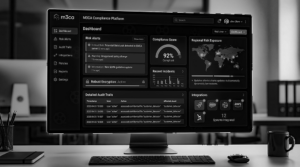 Enforcement continues to accelerate; between July 2024 and June 2025 1,948 sponsor licences were revoked ; more than double the previous year’s 937. Sponsors now face unannounced audits and fines of up to £60,000 per worker, and monthly visits are surging : 828 premises were visited in January 2025, a 48 % increase on January 2024.
Given this landscape, every sponsor needs a robust compliance toolkit. M3CA is a UK‑based Software‑as‑a‑Service platform purpose‑built for sponsor‑licence management. It combines AI‑powered risk checking with tools for candidate onboarding, document management and payroll monitoring, allowing sponsors to close compliance gaps before UKVI finds them. Below we explore why a platform like M3CA is no longer optional, review recent compliance statistics, and provide practical tips for staying audit‑ready.
Why Sponsor‑Licence Holders Need a Compliance Platform
Record‑breaking enforcement
- Licence revocations are at an all‑time high. Between July 2024 and June 2025 the Home Office revoked 1,948sponsor licences, more than double the 937 revoked the previous year. Enforcement has risen sharply since 2021‑22, when only 261 licences were revoked. This surge reflects the government’s policy of “real action to secure our border” and its willingness to ban employers from sponsoring foreign workers if they undercut salaries or flout the rules.
- Suspensions and revocations are becoming routine. In 2024 UKVI suspended or revoked 3,187 skilled‑worker licences; the figure in 2023 was 906. Unannounced inspections have increased dramatically: UKVI visited 828 premises in January 2025, a 48 % year‑on‑year rise. A single failed visit can lead to suspension, leaving existing migrant workers at risk of visa curtailment.
- Compliance visits are frequent and unannounced. One law firm notes that over 2,500 sponsor compliance visits took place in 2023. The M3CA platform itself warns that UKVI conducted over 4,800 compliance visits in 2023, illustrating how widespread audits now are.
Complex and evolving requirements
A sponsor licence holder must comply with dozens of obligations across HR, payroll and document management. These include:
- Right‑to‑work checks and record‑keeping ; sponsors must verify each worker’s identity, nationality and immigration status, retain copies of passports, visas and biometric residence permits, and record each worker’s start and end dates.
- Salary compliance ; employers must pay at or above the relevant Immigration Salary List (formerly the Shortage Occupation List) and maintain payslips, P45/P60 and payroll records for audit. Underpayments are a major reason licences are revoked.
- Monitoring and reporting sponsors must track visa expiry dates and notify UKVI of significant changes (e.g. job duties, work location, changes in salary) within 10 working days. Failure to report can lead to licence downgrades or revocation.
- Certificates of Sponsorship (CoS) – each sponsored worker must hold a valid CoS. Sponsors must ensure roles meet the correct Standard Occupational Classification (SOC) codes and salary thresholds, and they must keep copies of advertisements, interview records and proof that the role is genuine.
- Auditable HR files – CVs, interview notes, proof of qualifications and other HR documents must be kept up to date and easily accessible during an inspection. Inadequate record‑keeping is cited in nearly half of licence suspensions.
Given the complexity, manual processes are prone to errors. A digital platform like M3CA centralises these tasks and provides automated checks against current UKVI rules, reducing the risk of oversights.
How M3CA Protects Your Licence
AI‑powered risk checks across visa routes
M3CA’s core proposition is its AI risk‑assessment engine. For each visa route (Skilled Worker, Creative Worker and Global Business Mobility), the platform analyses your draft application against the latest immigration rules:
- Skilled Worker risk check. M3CA verifies the SOC code, salary threshold, going‑rate requirements and CoS validity and produces a prioritised risk report highlighting underpayment or mismatched job codes.
- Creative Worker risk check. The system covers maintenance funds, English‑language evidence, tuberculosis test requirements and genuineness tests for creative roles. It returns a scored risk assessment within 60 seconds along with a 12‑point checklist.
- Global Business Mobility check. For Intra‑Company Transfer, Senior/Specialist and Graduate Trainee visas, it assesses salary thresholds, undertakings and annual salary reviews to ensure compliance with Appendix GBM.
These automated checks catch issues before you submit a CoS, avoiding refusals and reducing legal costs. One client testimonial notes that the AI flagged a £3,200 salary shortfall in their Skilled Worker application, preventing an immediate refusal and saving the business significant time and expense.
End‑to‑end candidate pipeline
Sponsors must demonstrate that jobs offered to overseas workers are genuine and meet the correct skill and salary levels. M3CA’s candidate pipeline tool lets HR teams track each candidate from pre‑qualification to visa grant:
- SOC code search. The platform includes a live SOC code and Immigration Salary List library so recruiters can look up the correct code and salary before making an offer.
- Interview scheduling. Video, phone or in‑person interviews can be scheduled and logged; outcomes are recorded against each candidate’s file. This creates an auditable record showing that recruitment procedures were followed.
- Document scanning. Candidates’ CVs, passports, qualifications and references are uploaded securely. M3CA’s AI assesses these documents during the risk check phase to ensure they meet UKVI standards.
- Pre‑qualification and CoS check. Before issuing a CoS, users run the AI risk check. The system scores refusal risk across 12 compliance criteria and produces a prioritised action plan. This ensures that only compliant candidates proceed to sponsorship.
Visa expiry and payroll monitoring
Once a worker is sponsored, maintaining accurate records is essential. M3CA automates monitoring so that nothing is missed:
- Visa expiry alerts. The platform sends automatic reminders 90, 30 and 7 days before a worker’s visa expires. This prevents accidental overstays and ensures renewals are lodged on time.
- Payroll and payslips. Users log salary payments for each pay period (gross pay, tax, National Insurance and net pay), creating an audit trail that UKVI can request during a visit. The system can generate P45 and P60 statements for departing or annual employees and flags underpayments against the Immigration Salary List.
- Multi‑user access and audit trail. HR, legal and finance teams can all access the platform with role‑based permissions. Every action; document upload, interview outcome, payroll update; is timestamped so you can produce a complete record during an audit.
Understanding UKVI Compliance Visits and Revocations
What triggers a compliance visit?
UKVI may conduct announced or unannounced visits at any time. Triggers include:
- Pre‑licence inspections : before granting a licence, UKVI may visit to verify that the business is genuine and has systems to monitor migrants.
- Intelligence‑led audits : visits may be triggered by information suggesting non‑compliance, such as anonymous tips, discrepancies in HMRC tax records or benefit claims, or complaints from employees.
- Random sampling : sponsors are selected for routine checks as part of UKVI’s enforcement strategy.
During a visit, officers will interview key personnel, examine HR systems, review salary records, check right‑to‑work documents and inspect premises. They can also interview sponsored workers to confirm that their duties match the CoS.
Understanding UKVI Compliance Visits and Revocations
What triggers a compliance visit?
UKVI may conduct announced or unannounced visits at any time. Triggers include:
- Pre‑licence inspections : before granting a licence, UKVI may visit to verify that the business is genuine and has systems to monitor migrants.
- Intelligence‑led audits : visits may be triggered by information suggesting non‑compliance, such as anonymous tips, discrepancies in HMRC tax records or benefit claims, or complaints from employees.
- Random sampling : sponsors are selected for routine checks as part of UKVI’s enforcement strategy.
During a visit, officers will interview key personnel, examine HR systems, review salary records, check right‑to‑work documents and inspect premises. They can also interview sponsored workers to confirm that their duties match the CoS.
Best Practices: Staying Audit‑Ready
- Centralise documentation. Keep scanned copies of passports, visas, biometric cards, CVs, references and qualifications in a secure platform. Ensure the data is easily retrievable by authorised officers. M3CA’s document module provides this functionality.
- Use the correct SOC codes. Always check the Immigration Salary List or SOC code library before issuing a CoS. Roles must match the correct code and meet the going‑rate salary threshold. M3CA includes a built‑in SOC code search and salary library to reduce guesswork.
- Maintain a visible audit trail. Record recruitment steps (advertisements, interview notes, scoring matrices) to show that resident labour was considered and that the role is genuine. Use a platform that timestamps every action to demonstrate compliance.
- Monitor visa expiries and salary payments. Set reminders for visa renewal dates and run monthly checks to ensure salaries meet or exceed the required thresholds. Maintain payslips, P45 and P60 records for each worker as proof of compliance.
- Update UKVI promptly. Report changes (e.g. job role, location, hours, salary or personal contact details) within 10 working days via the Sponsor Management System. Non‑reporting is one of the most common reasons for suspensions.
- Train your team. Ensure HR and finance staff understand sponsor duties, right‑to‑work checks and digital verification processes. With over 1,000 Home Office staff redeployed to UKVI enforcement and an 81 % rise in civil penalties, ignorance is not a defence.
- Conduct internal audits. Schedule regular internal compliance reviews or use a platform like M3CA to run AI‑driven risk checks. Mock audits help identify gaps before UKVI does and can save thousands in legal fees and penalties.
- Plan for unannounced visits. Keep your premises, files and staff prepared at all times. Ensure that key personnel can access the sponsor management system and all relevant records quickly.
The UK government’s crackdown on visa‑sponsorship abuse means that compliance is now a high‑stakes activity. Licence revocations have more than doubled in a single year, and over 2,500 compliance visits were carried out in 2023. Employers face heavy fines and long bans if they fail to meet their obligations. In this context, investing in a dedicated compliance platform is not just prudent – it is essential. M3CA’s blend of AI risk analysis, automated monitoring, document management and affordable pricing gives sponsors the tools they need to protect their licence, support migrant workers and remain audit‑ready at all times.
By embracing technology, training staff and maintaining rigorous records, sponsors can navigate this evolving landscape, avoid costly enforcement action and continue accessing global talent with confidence.